Ward 2 Newsletter - Issue 33
January 16, 2026
What to Expect from Your Councillor this Election Year
Happy New Year Ward 2! I hope you had a restful break spent around those you love most. I know 2025 was a difficult year for many in our community and I’m wishing you a better 2026.
Not only is 2026 an election year for all municipalities in Ontario, it’s the first time in 16 years there won’t also be a Provincial election.
I believe most residents will view this as good news. Many residents have complained two elections in the same year is one too many. A single election allows voters to focus on work that’s been done by their Councillor over the past four years, and to hear what new candidates have to say about what they plan to do. Better focus means a better informed vote.
As I’ve stated before publicly, I’ll be running again this year as Councillor in Ward 2. Although I’ll be campaigning during the official election period starting in May, I will continue to fulfill all of my duties as Councillor, as I have worked hard to do since being elected in 2022, including -
Committee and Council Work - Tabling motions at Council, Standing Committee, and Sub-Committees for City work related to my 8 platform priorities - Environmental Stewardship, Affordable Housing, Accountable Leadership, Safe Neighbourhoods, Dependable Transit, Community Engagement, Responsive Services, and Sustainable Growth
Community Engagement - Connecting with residents in every corner of Ward 2, both informally and formally, to update them on the City’s work, to answer their questions, and to listen to their feedback through town halls, community meetings, and events I host personally
Community Events - Attending as many community events as my schedule will allow, as both Ward 2 Councillor and as Deputy Mayor (when I’m in that role)
Ongoing Communication - Personally, and through my office staff, via regular newsletters, mail outs, interviews with local media, and through posts, replies and comments on social media
Board Leadership and Participation - Ensuring Ward 2 is represented by my chairing of bodies like the Board of Health, Hamilton Farmers’ Market, and Hamilton Waterfront Trust and participating as a member of the Hamilton Police Service Board, Hamilton Public Library Board, and boards for the Art Gallery of Hamilton, Theatre Aquarius, CityHousing Hamilton, all three downtown BIAs, and the Hamilton Centre for Civic Inclusion
This year also means we’ll be changing how we administer our successful Ward 2 Community Grants program. Rather than accepting applications at the start of each quarter, we’ll be accepting one large round of applications between January 12 and March 6, to ensure they’re before Council in advance of May 1 when the campaign period begins. This is not a requirement, as grants are administered through an area rating reserve, but I think it’s best practice under the circumstances.
To be completely transparent, the City has a list of rules all elected officials must abide by during this period. Members of Council cannot provide sponsorships, pay for ticket expenses, or provide donations (I don’t do these things anyway) for any events occurring after May 1. We also can’t send out any communications to constituents from our offices after August 31.
I look forward to continuing to represent you this year and hope you’ll be engaged in this year’s election and get to know every candidate who puts their name forward, especially as we get closer to Election Day on October 26.
Province’s Recycling Program Impacting Local Businesses
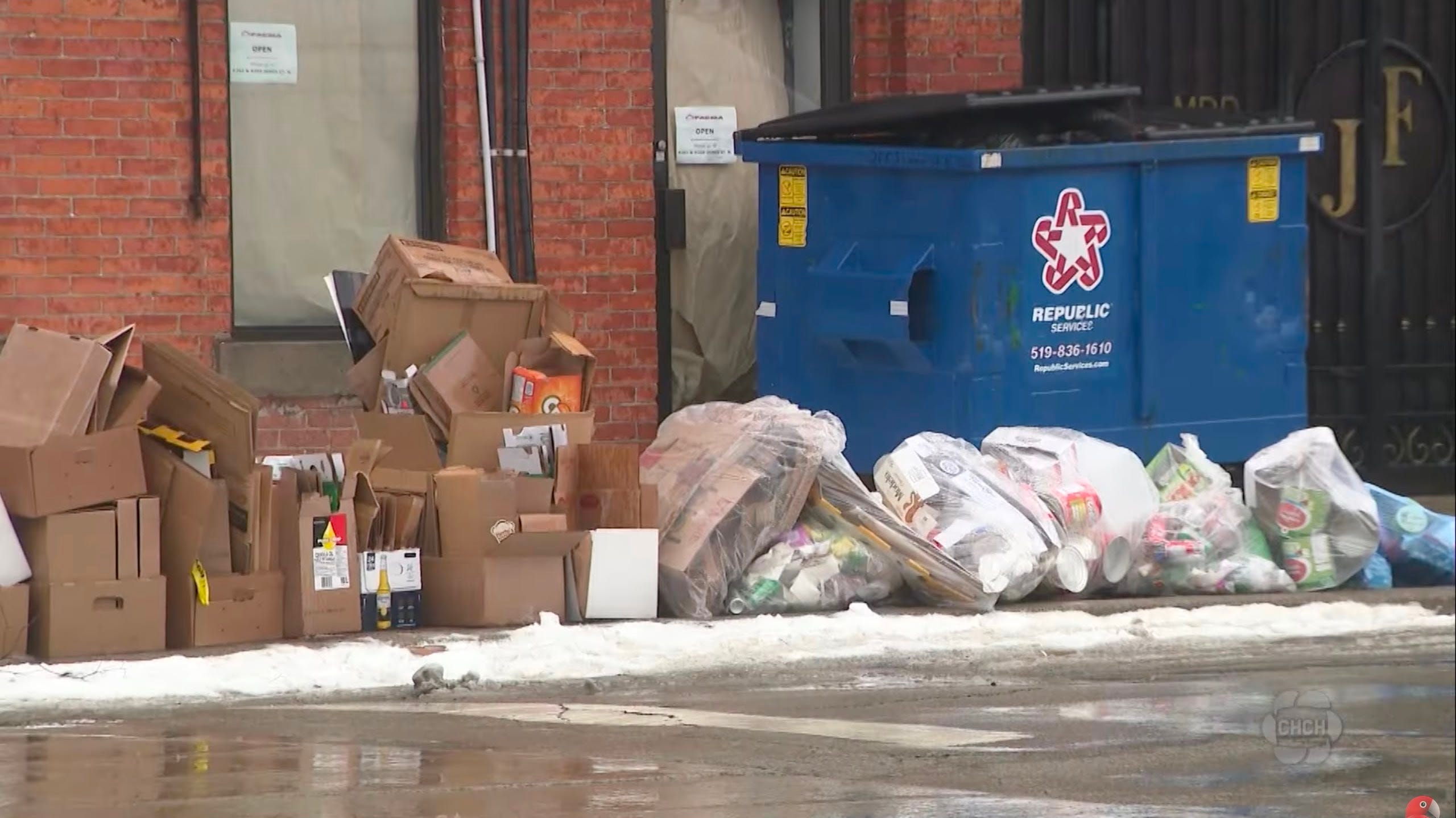
At the beginning of this year, some businesses were surprised to learn the date for collecting their recycling had changed, which generated some media coverage and some concern about changes to the recycling program.
Collection day for businesses downtown was moved from Tuesdays to Thursdays or Fridays, which caused a few days of discomfort along James Street North and other business corridors.
It’s all been sorted now, but there will be further issues for the community to confront when it comes to recycling, unfortunately.
Last year, a notice was sent to municipalities from the Province that it would take over recycling in Ontario effective January 1, 2026. When the Province did this, it decided to declare some commercial properties ineligible for collection. Previously, when the City was mandated to do this work, they were eligible, but the Province chose not to carry on that practice when they took it over.
The City recognizes this could put an undue financial strain on local businesses so Council opted, where many other cities in Ontario did not, to run a pilot project to absorb these costs until the end of March of this year. As part of the Mayor’s directive on the budget this year to “hold the line” at 4.25%, City staff could not continue the pilot any further, which leaves businesses on the hook for both the cost and the stress of finding a new provider to pick up their recyclables in time for the end of March.
In discussing this matter with City staff, there’s not a robust transition plan currently in place to help business owners and this is causing some serious concerns in the business community.
When I learned this I reached out to senior City staff and asked for a meeting to discuss a potential motion to help address this. I’m not sure what the motion will look like yet, but I hope it will either be a transition plan with an extension to the pilot or a motion to continue the program indefinitely. The decision is ultimately the Mayor’s, but I’ll work with businesses and staff to see what can be done and bring a motion forward through the budget process after meeting with City staff.
Inside Baseball - Public Works from Funding to Building
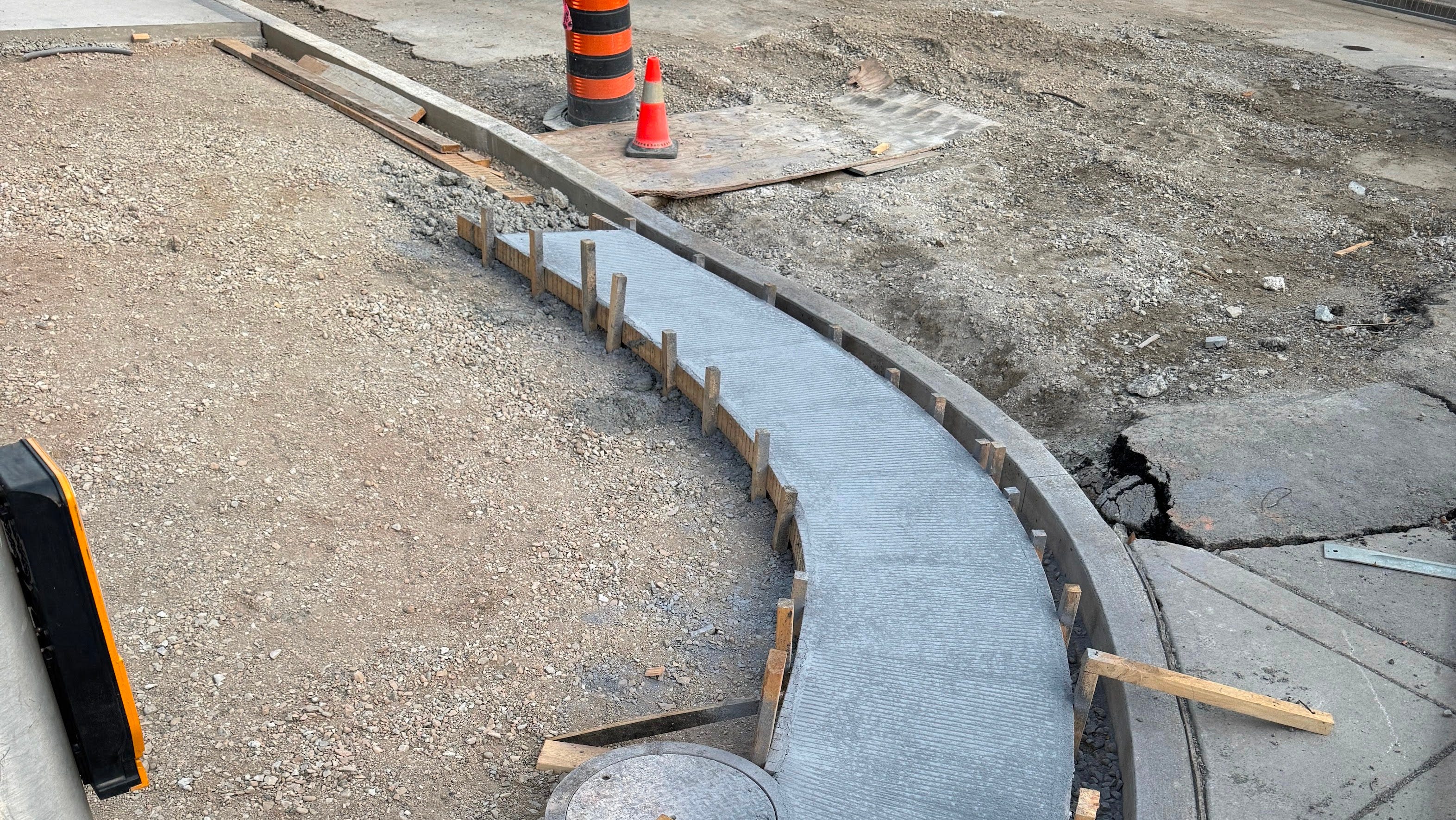
I’m often asked about when a particular project will start in Ward 2 and how the Public Works Department goes from project idea to physical construction. Examples include the installation of traffic lights or pedestrian crossovers (PXOs), repairing of sidewalks, and addition of water fountains in a park. In short, it’s not simple, but there are some common steps that, once you’re aware of them, make the process much easier to understand and follow.
There are 5 main steps to every project plan, broadly speaking -
Ideas and Plans
Every project starts with an idea or a plan. Ideas are not usually just plucked out of the air, to be clear, but come from staff workplans, asset management plans, multi year budget commitments, and resident feedback. Some things are highly dependent on staff, like wastewater and sewer maintenance, while other things can be based on observations from residents or Councillors’ offices, like improvements to street safety or sidewalks. A basic idea or a plan is important to get the conversation started, but in order for it to be presented for funding, there usually needs to be some initial analysis and consideration and sometimes a high level report from City staff including a slightly more detailed description of the plan or idea and possibly a scope for the project, funding analysis, and broad timelines. The installation of a water fountain is far less complicated, for instance, than building a bridge.
ExamplesInstallation of wifi in Ward 2 parks, inspired by conversations with residents during the 2022 campaign
Conversion of Queen Street North from one way to two ways, developed from a Council motion as part of a staff workplan
Funding
Every project in the City needs to be funded in order for it to be designed and constructed (usually with a built in contingency in case there are unexpected costs). Without funding, ideas don’t go anywhere. This funding always comes through a motion to Council, either through the budget process or from individual Councillors who have access to Ward level reserves. Some things cost very little, like a speed cushion (usually a few thousand dollars), while others, like road resurfacing, can cost hundreds of thousands of dollars. Traditionally, there’s been a focus on trying to distribute funding evenly across the city, despite there being a need for an equity focus. An equity focus looks like considering assets, like sidewalks and roads, based on how often they’re used and by whom they’re used and deciding how to fund them based on their condition. Instead, different communities get different standards. What’s acceptable downtown would never fly in many other parts of the City, but bringing downtown assets up to the same standard as everywhere else is also not a priority. What that looks like in practice is well maintained assets in some parts of the city and crumbling assets in other parts. This means having to fund projects from area rating reserves, which are not big enough to tackle everything that needs to be done.
ExamplesArea rating reserves used to make the Bennetto Auditorium more accessible
City Department funding, allocated through the budget process, used to purchase and install more garbage cans downtown
Design
Once a project receives sufficient funding to proceed and has been approved by Council, it goes through a period of design. If that design is relatively simple, like a pedestrian crossover (PXO), it goes to a step internally known as detailed design. I’ve seen a few of these designs. Some are done in house and some are done by consultants. The more complex a design is, the more it requires outside expertise, as the City does not have enough staff who can take every kind of design project. These designs often look at how to redesign spaces between sidewalks and at intersections including turning radii, medians, and speed limit changes. This part of the process is usually the most time consuming as it can involve consultation with neighbourhoods (for larger projects), which might look like a meeting, online consultation, or presentation to gather feedback (or all of these things).
ExamplesDetailed design of the lighting installed on MacNab Street South to increase safety near the MacNab Presbyterian Church
Design of the conversion of Main Street from one way to two ways
Procurement
Once a design has been finalized, the project can be put out for tender through the procurement process. In short, we need to find someone to do the work and we have to go through a transparent public process. During that process the City puts out their project and gets bids from companies who want to do the work. This part of the process usually slows things down a fair bit as gathering all the materials, putting them out publicly, waiting for bids, vetting those bids, and choosing the successful bidder can take many months. In the end, there aren’t a huge number of companies bidding on most of these projects, which makes it feel frustrating to go through this process (over a certain dollar amount), but as a municipality it’s important we’re transparent about how we spend public dollars. We’re required to go through these processes to demonstrate to the public that we’re being responsible with the money we collect through taxes. Once the procurement process is complete, projects are put in the queue with existing projects and actioned as quickly as possible with competing priorities based on the type of project, location, season, and staff capacity.
ExamplesAwarding the crosswalk to be installed at the West Harbour GO Station (planned for 2026)
Putting road resurfacing on King Street West out for tender (completed in 2025)
Construction
This is the most satisfying part of the process for everyone - seeing the project come to life after what is often months and years of planning. It’s also the part of the process that’s the most unpredictable, difficult to schedule, and subject to change. The companies doing bidding on projects are not focused solely on the one project you or I might care about most, but are balancing dozens of different projects at a time and trying to allocate their time and resources efficiently to reduce their own costs. If, for instance, a project is ready to go but gets delayed by bad weather, everyone might focus on another project that can be started in bad weather and not circle back for months. Sometimes, the conditions on the ground change things. Conditions on the ground might surprise a contractor, require a change in plans, and delay things. What’s meant to be sorted out in 2 weeks can take much longer. In an older city like Hamilton, this can really slow things down.
ExamplesRepairing the void under the sidewalk near James Street and King Street
Installation of lighting and pigeon netting in the James Street South and John Street South underpasses
I sometimes hear from residents who are frustrated with a timeline and think that it’s a simple matter of a Councillor putting pressure on staff to “get things done”. I hope this has given you a sense of the cycle for these projects, how things work at the City, and why, sometimes, things take much longer than we’d like.
I’m constantly working with staff to try to improve timelines, find efficiencies, and get projects delivered more quickly, but most of it is out of my hands (and theirs). It’s why I continue to fund as many projects as I can, as quickly as I can, to ensure they get put into the queue and completed so we can enjoy the fruits of all this labour.
Upcoming Meetings and Events
This section lists upcoming Ward 2 public meetings including town halls happening over the next few months. Some of this information may change closer to the meeting dates, including times and locations.To read Committee and Council Agendas and Meeting Notices, please subscribe to updates directly through the City’s website or visit the City’s Committee Calendar.
For more on what’s happening in the downtown community, check out event listings from The Vibe Hamilton, Hamilton City Magazine’s regular events listing, and the Ward 2 website’s Community Meetings page.